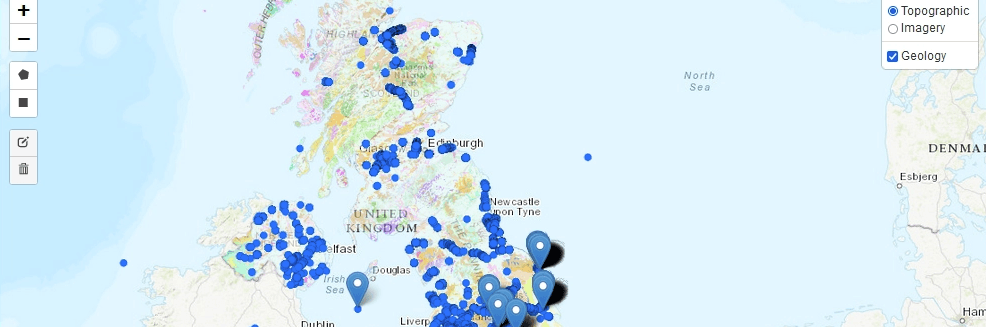
The UK’s proposed Ground Data Bill may sound technical, but its impact could be far-reaching for engineers, contractors, consultants, and infrastructure clients. At its core, the Bill addresses a problem the construction industry has wrestled with for years: too much valuable ground investigation data is collected, used once, and then locked away, forgotten, or lost in disconnected archives.
If passed, the legislation would require factual geotechnical data from site investigations to be submitted to the British Geological Survey. That includes information such as borehole logs, soil and groundwater test results, and site investigation reports. Supporters argue that making this data more consistently available could help reduce project risk, cut unnecessary duplication, improve planning, and lead to better decisions earlier in the life of a project.
For anyone involved in borehole logging, boring logs, and site investigations, that is a significant shift. It moves ground data away from being treated as a project byproduct and toward being recognised as long-term infrastructure knowledge.
What is the UK’s Ground Data Bill?
The Ground Data Bill, also referred to as the Ground Data for Growth Bill, was introduced in the UK on 3 March 2026 as a proposed way to improve how geotechnical information is shared and retained. The idea behind it is relatively straightforward. When ground investigations are carried out, the factual data generated should not remain buried within private project files or scattered across consultants, contractors, and client organisations. Instead, that information should be submitted into a national framework where it can support future projects.
This matters because ground investigation data is not only useful for the project that paid for it. Borehole logging records, laboratory test results, groundwater observations, and site investigation reports can all help inform future desk studies, identify local ground risks, and reduce uncertainty for nearby or similar developments.
At present, there is guidance in place encouraging better data sharing, especially on public works projects, but guidance alone has not solved the problem. In practice, compliance is inconsistent. Data ownership is often unclear, contractual responsibilities are blurred, and project teams are left unsure about who is supposed to submit the information, when it should be submitted, and in what format.
The proposed Bill is an attempt to close that gap. Rather than relying on good intentions or variable contract language, it would create a clearer expectation that factual geotechnical data should be preserved and shared for wider industry benefit.
Why borehole logging plays such a critical role in site investigations
For engineers, the value of borehole logging is obvious. It underpins desk studies, helps shape investigation scope, and informs how teams assess ground risk early. That is exactly why the UK’s Ground Data Bill matters. If more factual geotechnical data is consistently shared, future site investigations can start with a stronger evidence base and fewer blind spots.
For UK teams, the language is usually borehole logging. In the US, many engineers will think in terms of boring logs. Either way, the challenge is the same: valuable subsurface data often exists, but too little of it is easily available when new projects need it most.
The problem with fragmented ground investigation data
The construction industry does not suffer from a lack of geotechnical data collection. It suffers from a lack of consistent geotechnical data sharing.
Across the UK, huge amounts of ground investigation information are generated every year through infrastructure, transport, utilities, energy, and development projects. Yet only a fraction of that data makes its way into widely accessible national datasets. Much of it remains siloed inside consultant reports, contractor records, client folders, PDFs, spreadsheets, or legacy databases that are difficult to search and even harder to reuse.
That fragmentation creates several problems:
- Weaker desk studies. If previous ground investigation data is missing or inaccessible, teams are forced to build baseline models on incomplete evidence. That increases uncertainty at the exact stage where better information could save time and money.
- Duplicated work. When old borehole logs, boring logs, soil test results, or site investigation reports cannot be located, new project teams often repeat work that has already been done. That adds cost, extends programmes, and creates inefficiency across the sector.
- Higher construction risk. When incomplete data shapes project planning, design teams are more likely to encounter unforeseen ground conditions during construction. Those surprises can lead to redesigns, delays, claims, safety concerns, and avoidable disruption on site.
- Lost long-term knowledge. Each project generates information that could strengthen future site investigations, but without a consistent mechanism for sharing and preserving that information, the industry keeps losing valuable lessons beneath the surface.
This is not just an issue for smaller developments. Large and complex infrastructure schemes face the same barriers. Even major projects can struggle to release and reuse geotechnical information because of contractual ownership issues, intellectual property concerns, and a lack of clarity about who controls the data once the fieldwork is complete.
How better data sharing could reduce delays, risk, and rework
The strongest argument for the Ground Data Bill is not administrative. It is operational.
When engineers have access to better historical ground data, they are in a stronger position to make informed decisions earlier. That can improve the planning of site investigations, help teams focus fieldwork where it is most needed, and reduce the likelihood of making assumptions based on incomplete evidence.
In practical terms, that means fewer blind spots.
A more complete body of borehole logging data can help teams identify known ground conditions sooner. A broader archive of site investigation reports can help planners understand previous challenges in a local area. Better access to geotechnical data can improve risk reviews before procurement, design, and construction activities begin.
That matters because ground-related surprises are rarely minor. Unforeseen conditions below the surface can quickly affect cost, schedule, safety, and constructability. An issue discovered too late may trigger redesign, additional testing, revised construction methods, or disputes over responsibility. In contrast, the earlier those risks are identified, the more options a team has to manage them.
Better data sharing also improves efficiency. Site investigations become more targeted when teams know what information already exists. Instead of commissioning work from scratch, they can refine the scope around actual gaps in knowledge. That leads to smarter use of time and budget rather than broader, less focused investigation campaigns.
For clients, this creates a compelling value case. Sharing factual ground investigation data does not just benefit the project that generated it. It can also lower risk for future public works, support better procurement decisions, and reduce waste across the wider construction ecosystem.
Why this matters for engineers, consultants, and infrastructure clients
The proposed legislation matters because it speaks to a shared problem across the industry, but its value looks slightly different depending on where you sit.
For engineers and engineering geologists, better access to geotechnical data strengthens the technical foundation of project decisions. It gives teams more context for interpreting ground conditions and helps improve the quality of desk studies, conceptual models, and risk assessments.
For consultants, it offers the chance to build site investigation workflows on a stronger evidence base. That can improve the relevance of recommendations, reduce unnecessary duplication, and help clients understand why certain investigation scopes are being proposed.
For contractors, better data can support more realistic construction planning. Knowing more about likely ground conditions before work starts helps reduce uncertainty around excavation, temporary works, dewatering, piling, and materials handling. That can improve both programme confidence and cost forecasting.
For infrastructure clients and asset owners, the case is broader still. Better ground data sharing can help projects move from reactive decision-making to more informed planning. Over time, a richer pool of borehole logging, boring log, and site investigation data could support everything from transport upgrades and utilities work to housing, energy, water, and resilience planning.
There is also a public value argument here. Much of this information is generated through major projects with long-term societal importance. When factual geotechnical data disappears into private archives, the sector loses an opportunity to create a better evidence base for the next generation of infrastructure.
What this could mean for the future of digital borehole logging
The Ground Data Bill also points toward a bigger conversation about digital maturity in ground engineering.
If the industry wants geotechnical data to be reusable, searchable, and valuable beyond a single project, then the way that data is captured matters just as much as whether it is shared. Static reports and disconnected files may satisfy immediate project needs, but they often make long-term reuse difficult. By contrast, digital borehole logging workflows can help turn field observations into structured, consistent, and more easily transferable project data.
That does not mean every challenge is solved by software alone. Questions around standards, submission frameworks, ownership, permissions, and security still need clear answers. But it does mean that the future of better geotechnical data sharing is closely tied to better digital practices.
For firms already modernising their site investigation workflows, this kind of legislation could accelerate the need for cleaner data structures, stronger reporting consistency, and more deliberate data management. For organisations still relying heavily on manual or fragmented processes, it may become another signal that the industry is moving toward a more connected and reusable model of subsurface information.
There is also a sustainability angle that should not be overlooked. Better access to historical ground data can reduce unnecessary repeat investigations, improve design efficiency, and help avoid overengineering. Over time, that can support lower-carbon project delivery as well as better climate resilience planning.
In that sense, the future of digital borehole logging is not just about speed or convenience. It is about making site investigation data more useful, more durable, and more valuable across the life of infrastructure.
A policy story with wider implications
The UK’s Ground Data Bill is ultimately about more than compliance. It is about whether the construction and infrastructure sector is willing to treat ground investigation data as a shared strategic resource rather than a disposable project output.
For professionals involved in borehole logging and site investigations, the Bill highlights a challenge that has existed for years. The industry already collects huge volumes of valuable ground data. The real issue is what happens to that data afterward.
If the legislation succeeds, it could improve how geotechnical information is preserved, accessed, and applied across future projects. That would not only benefit engineers working on today’s developments. It could also strengthen the baseline knowledge that underpins tomorrow’s infrastructure decisions.
For the wider industry, that is the real opportunity. Better ground data is not just a record of past work. It is a foundation for better future decisions.