
A newly built home is meant to offer confidence. New finishes, modern layouts, fewer maintenance issues, and the assumption that everything beneath the structure has been properly assessed, designed, and built.
But a recent housing dispute in Utah tells a different story.
Homeowners in the Winn Ridge neighbourhood of Nephi have alleged that homes built in 2022 and 2023 began showing serious signs of settlement soon after completion. Cracked walls, sloping floors, sticking doors, basement floor fissures, roof separation, and water ingress have all been reported. For the families involved, these are not minor cosmetic issues. They point to a much deeper problem below the surface.
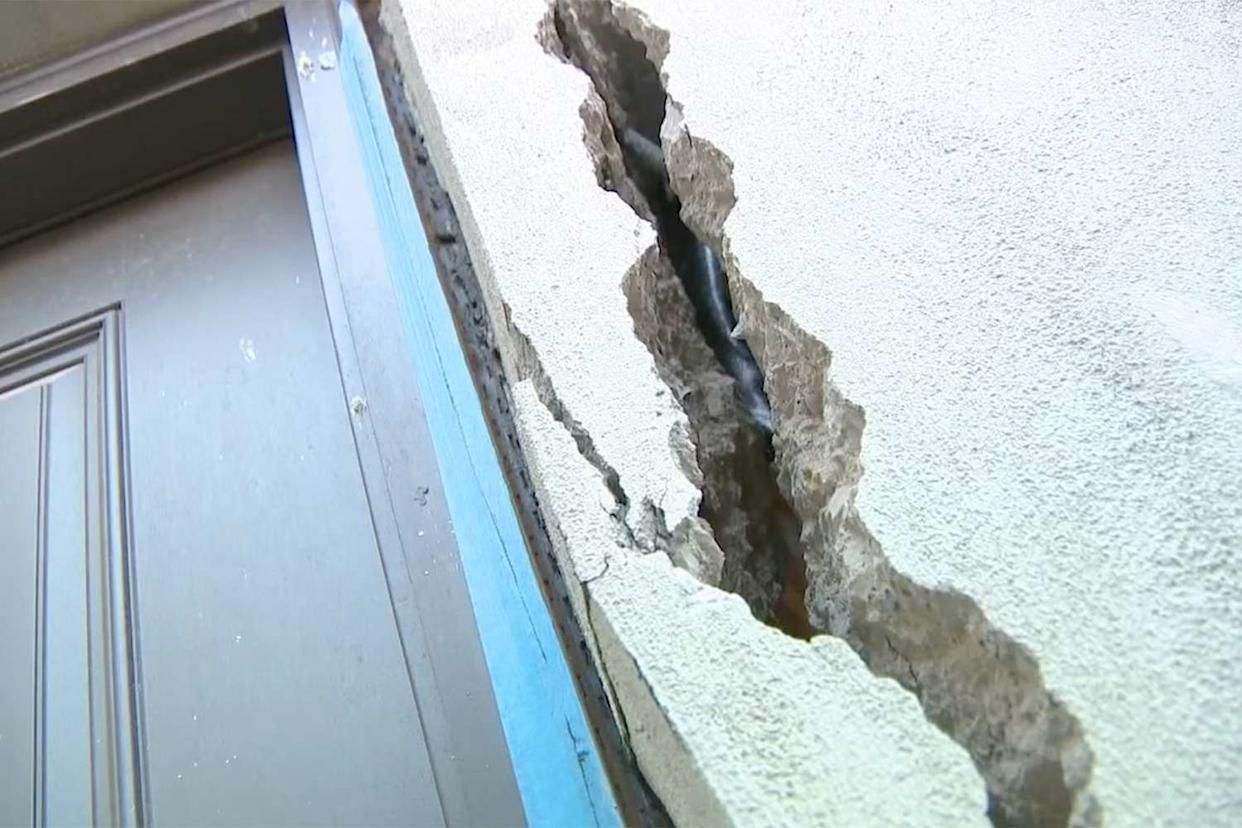
At the centre of the dispute is an allegation that a geotechnical report had already identified the site soils as having moderate to high collapse potential. According to reporting on the case, the report recommended compacted fill beneath foundations and the installation of foundation drains. The lawsuit alleges those measures were not properly carried through during construction.
The case is still before the courts, and those claims remain allegations. But regardless of the legal outcome, the engineering lesson is already clear.
A geotechnical report is not paperwork for the file. It is a risk management document. When recommendations related to soil behaviour, drainage, and site preparation are missed or ignored, the effects can show up quickly and at a very high cost.
What collapsible soils can do to a new home
For people outside the geotechnical world, terms like collapse potential can sound technical and remote. In reality, the consequences are highly visible.
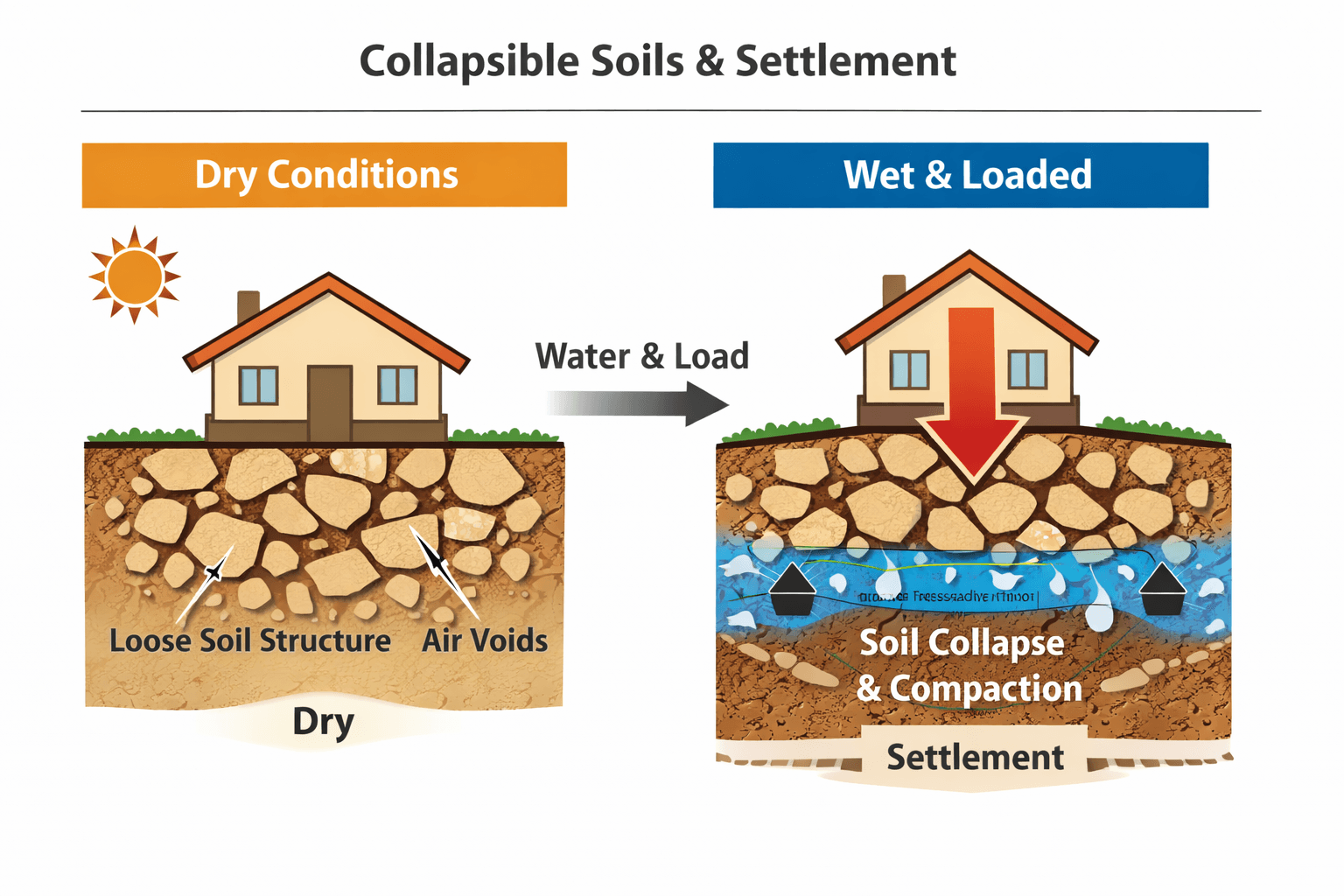
Collapsible soils are typically unsaturated soils that can undergo a sudden reduction in volume when wetted, loaded, or both. Guidance from Caltrans notes that this particle rearrangement can cause damaging settlement beneath structures, while FHWA guidance similarly identifies collapsible and highly compressible soils as widespread foundation risks across the United States.
What starts as a small crack in plaster can quickly become a much bigger problem. Floors begin to slope. Doors stop latching. Roof lines shift. Services come under stress. Water begins finding its way into places it should not.
 Collapsible soils and settlement
These kinds of failures are exactly why foundation design on moisture-sensitive ground matters so much. The performance of a structure is only as reliable as the ground response beneath it and the way that response has been accounted for in design and construction.
The report only works if it reaches the site
The clearest lesson from Utah is not just that the ground was problematic. It is that geotechnical advice only reduces risk when it is actually implemented.
That sounds obvious, but this is where many projects break down.
A report may identify hazards correctly and recommend treatment measures in detail. But if those recommendations are not clearly communicated, enforced, inspected, and documented during construction, the report loses most of its value.
That gap can happen in several ways. The builder may not fully understand the importance of the recommendations. The earthworks contractor may take shortcuts on fill placement. Drainage details may be seen as secondary. Site conditions may change without triggering a geotechnical review. Hold points may be assumed rather than verified.
This is one reason FHWA shallow foundation guidance places such weight on investigation, design, construction procedures, and acceptance of foundation support conditions. Good geotechnical input does not end with the report. It needs to carry through to site practice.
Why drainage is often part of the failure chain
One of the most important details in the Utah case is the reported absence of foundation drains, despite them allegedly being recommended in the geotechnical assessment.
That matters because foundation performance is rarely just about the soil profile alone. It is also about moisture.
Poor drainage, uncontrolled runoff, leaking services, perched water, and changes in moisture conditions around a structure can all trigger movement in sensitive ground. Guidance on expansive and moisture-reactive soils consistently points to drainage and water management as central controls in reducing foundation distress. Colorado Geological Survey’s overview specifically notes that ponding water near foundations can contribute to construction problems in reactive soils.
This is why drainage recommendations should never be treated as optional extras. They are often central to the long-term performance of the foundation system.
The visible damage is often only the beginning
Cracked walls and sloping floors are the signs homeowners notice first. They are also the issues most likely to be dismissed early as cosmetic settling.
But repeated movement in a near-new home should never be brushed off too quickly.
Differential settlement can affect much more than finishes. It can distort door and window openings, crack slabs, damage waterproofing systems, separate roofing interfaces, place services under strain, and create new pathways for moisture or gas ingress.
In the Utah case, homeowners also raised concerns about radon entering through basement floor fissures. That concern is consistent with guidance from both the U.S. EPA and Utah state radon resources, which note that radon can enter homes through cracks and openings in foundations and slabs, especially where pressure differences draw soil gas indoors.
QA and verification are where projects succeed or fail
If the Utah case points to one practical takeaway for industry, it is this: construction-stage verification matters.
On sites with known ground risks, quality assurance is not paperwork. It is proof that the design intent was carried through.
That means asking the right questions:
- Was fill placed in the specified layer thicknesses?
- Was the material suitable?
- Was moisture conditioning adequate?
- Were compaction targets achieved and recorded?
- Were foundation drains installed where required?
- Were hold points observed before pouring concrete?
- Were unexpected site conditions escalated and reviewed?
If the answer to those questions is unclear, the project may already be carrying hidden risk.
For geotechnical consultants, this is also a reminder to write recommendations that are practical, specific, and tied to verification where possible. The best report is not just technically correct. It is also clear enough to drive action on site.
Why residential projects should not be treated as low-risk
There is a tendency in some parts of the industry to underestimate residential work because it is common, repetitive, and smaller in scale than major infrastructure.
But ground conditions do not care what is built above them.
A family home can be highly sensitive to differential movement, especially when built across variable fill, moisture-sensitive soils, or poorly controlled site preparation. And because residential projects often operate under tighter budgets and faster programs, the temptation to compress steps or simplify controls can be stronger.
That is what makes these projects vulnerable. Recommendations that would be treated as critical on a larger engineered asset can sometimes be watered down on a housing development if oversight is weak.
The result is a structure that may look complete at handover but is already carrying the seeds of future failure.
The bigger lesson from Utah
Whether the allegations in this case are ultimately proven in court or not, the engineering principle remains the same.
Geotechnical risk is not resolved when the report is written. It is resolved, or at least managed, when the recommendations are followed through design, construction, inspection, and verification.
That means:
- clear site preparation requirements
- practical compaction controls
- proper moisture and drainage management
- defined hold points and inspections
- accountability across the project team
When those pieces line up, the geotechnical report does its job quietly in the background.
When they do not, the consequences can emerge quickly and painfully. A new home can begin performing like a distressed asset within just a few years. And where structural deficiencies materially affect soundness or integrity, financing and resale can become more difficult. Fannie Mae’s current selling guide states that loans secured by properties with severe condition deficiencies affecting structural integrity are not eligible for sale until repaired. That guidance is here.
That is the real lesson from Utah.
The geotechnical report matters because it is often the clearest warning a project will get before the ground starts to move.