TabLabs LIMS for Construction Materials Testing Laboratories in Australia
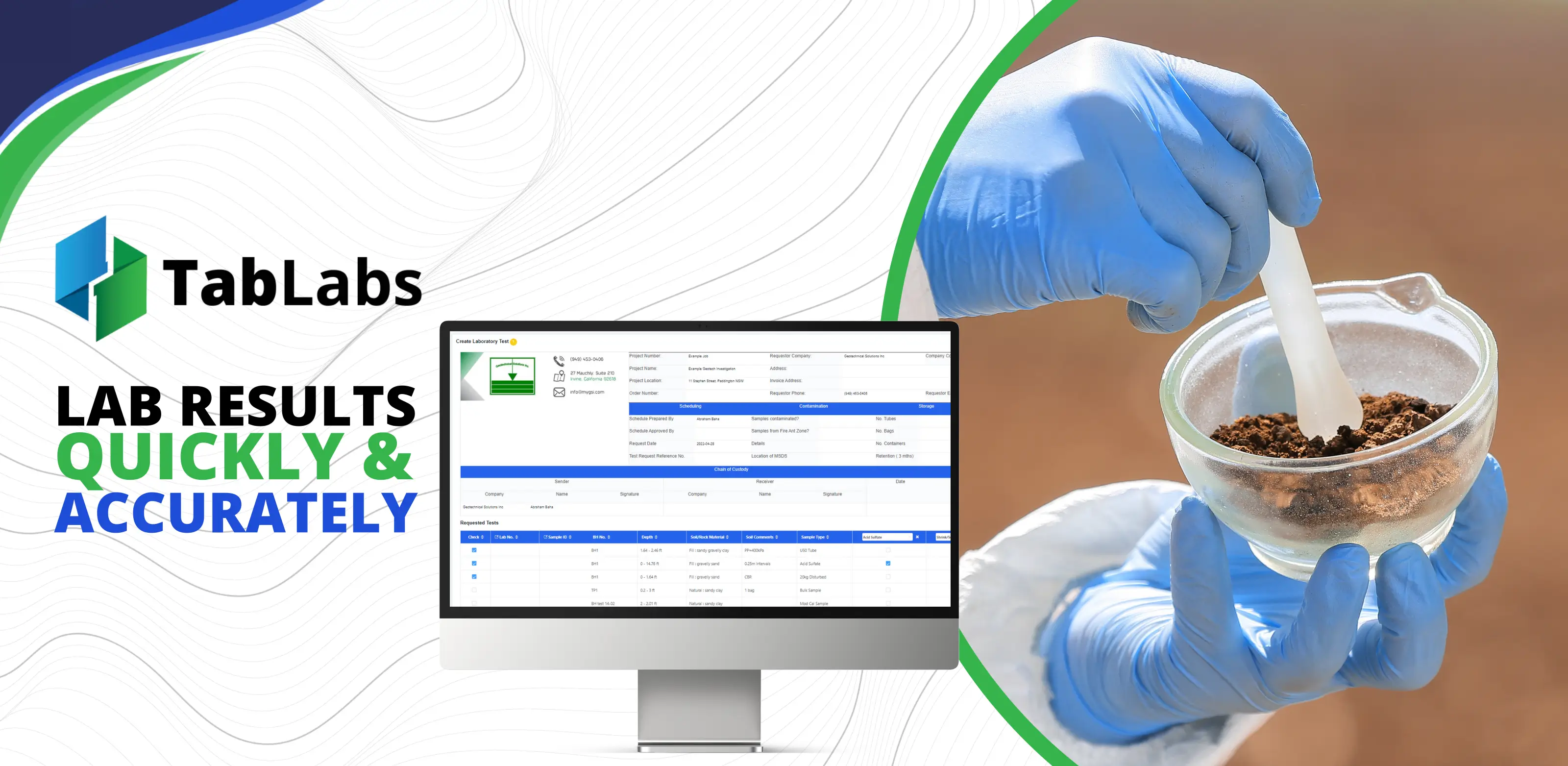
TabLabs is a Laboratory Information Management System purpose built for Australian construction materials testing laboratories. Designed to support NATA accreditation, ISO/IEC 17025 compliance, and Australian Standards including AS 1289 and Austroads methods, TabLabs connects field testing and laboratory operations into one unified system.
Built for Australian Construction Materials Testing Laboratories
TabLabs is designed specifically for laboratories performing construction materials testing across civil infrastructure, road construction, subdivision development, mining, and environmental projects. Whether your laboratory performs soil classification, compaction testing, concrete strength testing, asphalt analysis, aggregate testing, or environmental sampling, TabLabs provides structured workflows aligned with Australian Standards and industry requirements. The system supports laboratories operating across multiple locations and project sites, ensuring consistent execution, traceability, and reporting across teams.
End to End Sample and Test Management
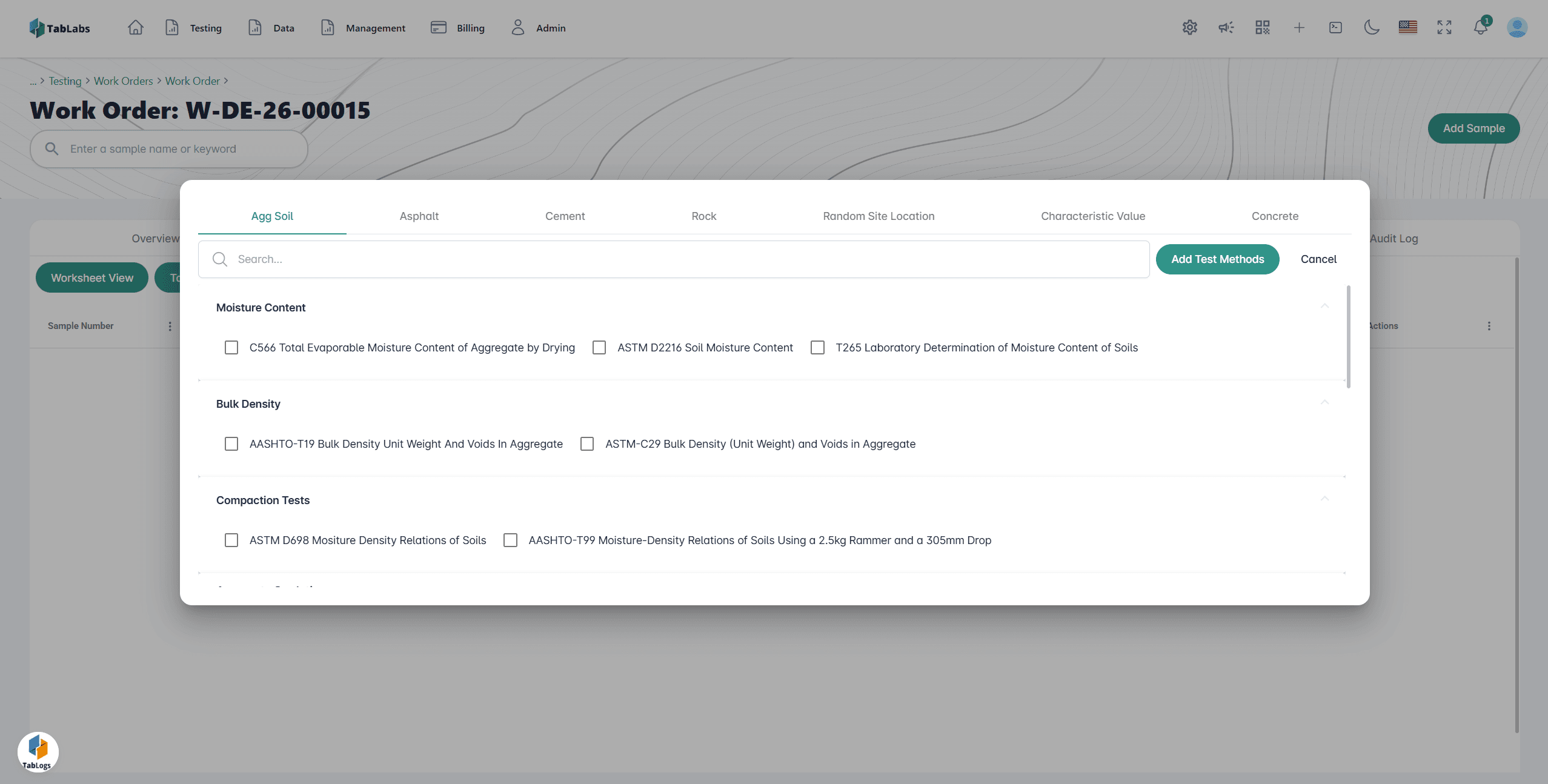
Manage the full lifecycle of samples and tests from intake through to final reporting. TabLabs provides complete visibility across your construction materials testing laboratory, helping managers oversee workloads, turnaround times, and test status in real time. From sample registration and test allocation through to results review and approval, every action is recorded and traceable. Laboratories can reduce bottlenecks, eliminate manual spreadsheets, and improve operational oversight across projects and locations.
- Structured sample registration workflows
- Automated test assignment
- Real time progress tracking
- Approval and review controls
- Full audit trail from intake to reporting
Standards Driven Workflows for NATA Accredited Laboratories
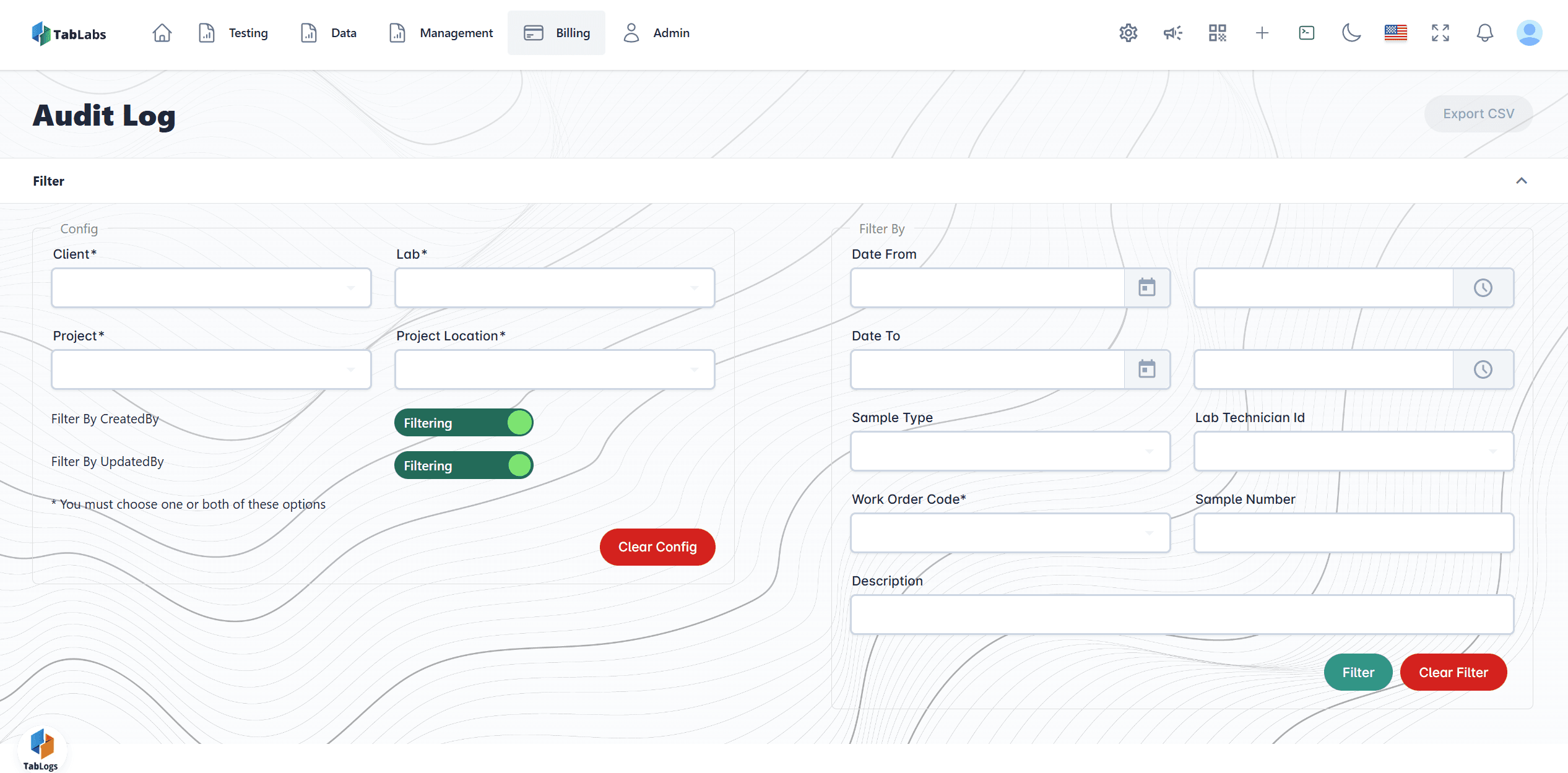
TabLabs is designed to support laboratories operating under ISO/IEC 17025 and NATA accreditation requirements. Built in controls help laboratories maintain traceability, documentation integrity, and audit readiness across all testing activities. The system supports Australian Standards including AS 1289, Austroads methods, and state road authority specifications such as TfNSW, VicRoads, TMR, and other regulatory frameworks. Test methods can be configured to reflect internal procedures while maintaining compliance alignment.
- Controlled test method templates
- Version tracking and approvals
- Audit ready data traceability
- User permissions and role control
- Equipment and calibration tracking
- NATA audit support documentation
Flexible LIMS Designed Around Your Laboratory
Extensive Test Method Support
Supports soils, concrete, aggregate, asphalt, geotechnical, and environmental testing methods aligned with Australian Standards and project specifications. Custom methods can be created while maintaining full traceability.
Seamless API Integration
TabLabs connects with external systems including ERP platforms, client portals, and field data platforms to ensure consistent data flow across your organisation.
ISO/IEC 17025 Compliance
Designed to help laboratories maintain ISO/IEC 17025 compliance and support NATA accreditation requirements through structured workflows and full data traceability.
Mobile LIMS App for Field and Onsite Testing
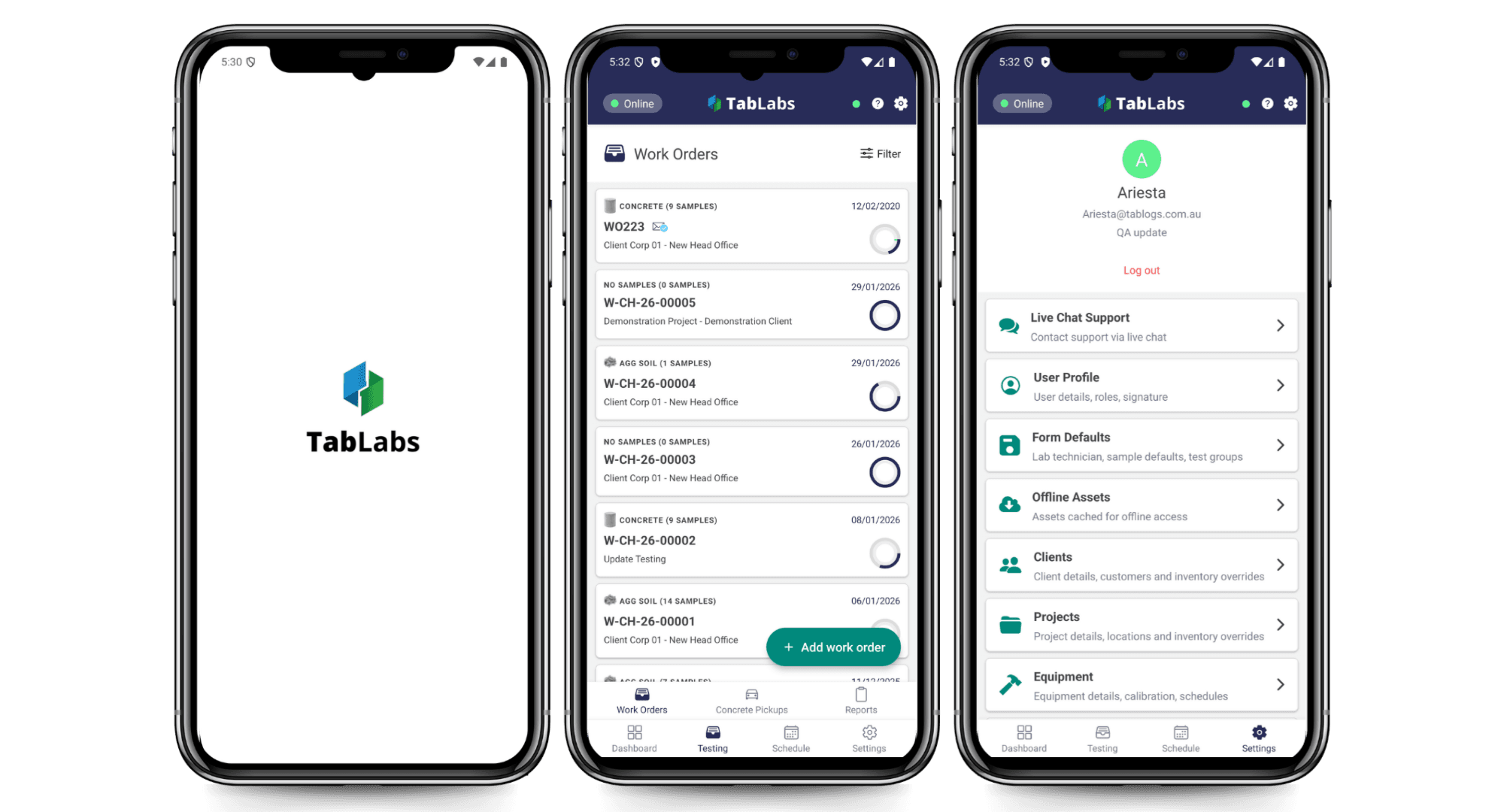
TabLabs includes a mobile application built for construction materials testing technicians working onsite across Australia. Field personnel can capture test results directly into the system during execution, eliminating paper forms and secondary data entry. Capture compaction results, concrete slump tests, density measurements, CBR tests, pavement testing data, and other field measurements directly into your central LIMS. The mobile app supports remote project locations with offline functionality and automatic synchronisation when connectivity is restored.
- Real Time Data Capture in the Field
- Offline Mode for Remote Projects
- Direct synchronisation with laboratory workflows
- Reduced transcription errors
- Immediate visibility for lab managers
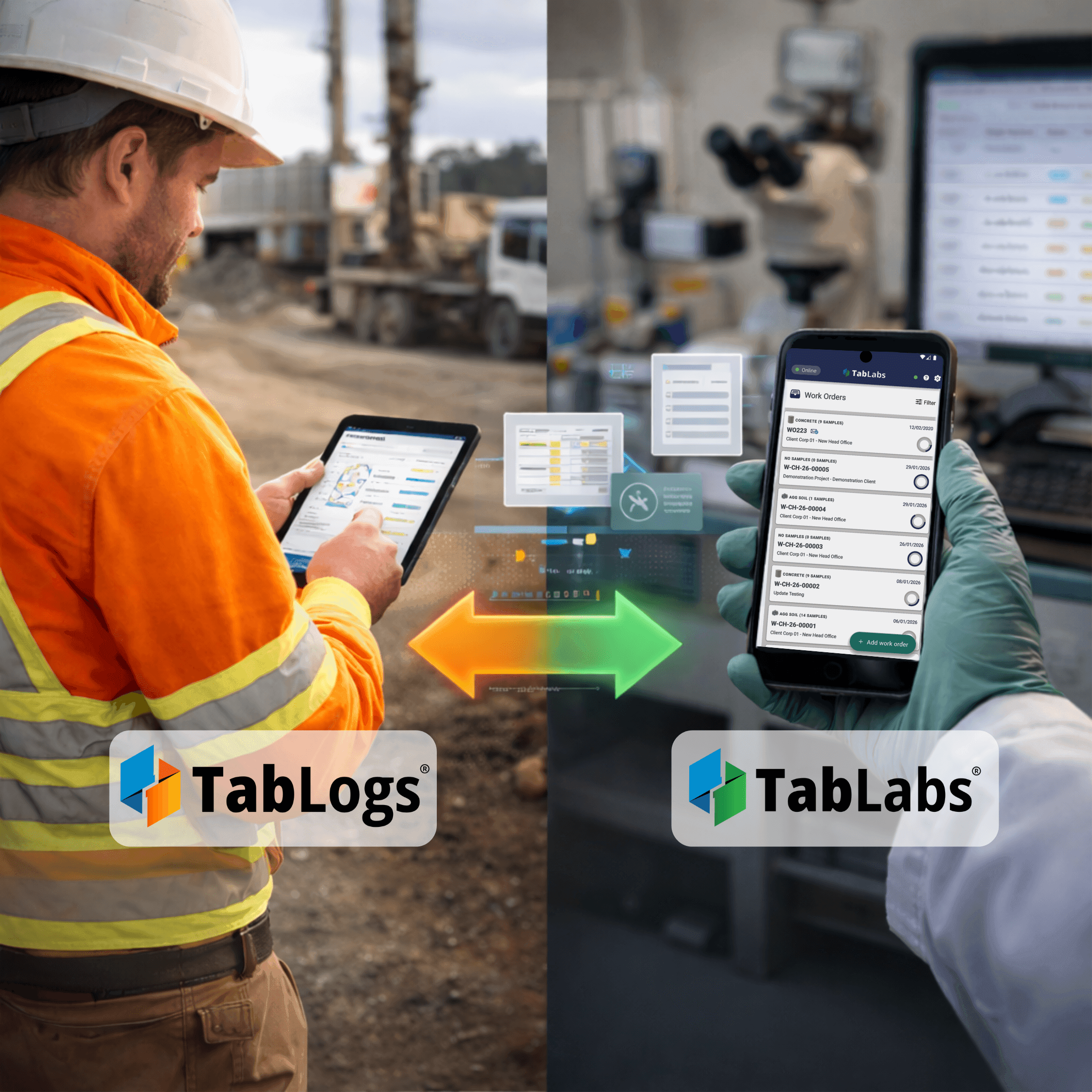
Integrated with TabLogs for Complete Field to Lab Workflows
TabLabs integrates directly with TabLogs to create a unified field to laboratory workflow for Australian construction materials testing organisations. Samples logged in the field using TabLogs can automatically generate structured test requests within TabLabs. Laboratory results can then sync back to field records in real time, creating a single, connected data environment across projects. This integration reduces manual sample transcription, eliminates disconnected systems, and strengthens audit traceability from field collection through to final reporting.
- Direct sample requests from field logging into the laboratory
- Real time lab results synced to field records
- Reduced manual data entry and transcription errors
- Early reconciliation of field and lab data
- Centralised construction materials data environment
Designed by Lab and Field Experts
TabLabs is developed by the team behind TabLogs in collaboration with Australian construction materials testing professionals. The system reflects practical field and laboratory experience across civil and infrastructure projects. Workflows align with how data is collected onsite, processed in the laboratory, reviewed by engineers, and delivered to clients and regulatory authorities. This practical alignment helps laboratories adopt new systems confidently while minimising operational disruption.
Pricing and Availability
TabLabs is available to Australian construction materials testing laboratories with pricing tailored to laboratory size, test volume, and operational complexity. Our team works directly with laboratories to scope the appropriate configuration, implementation plan, and integration requirements. No long term contracts required.