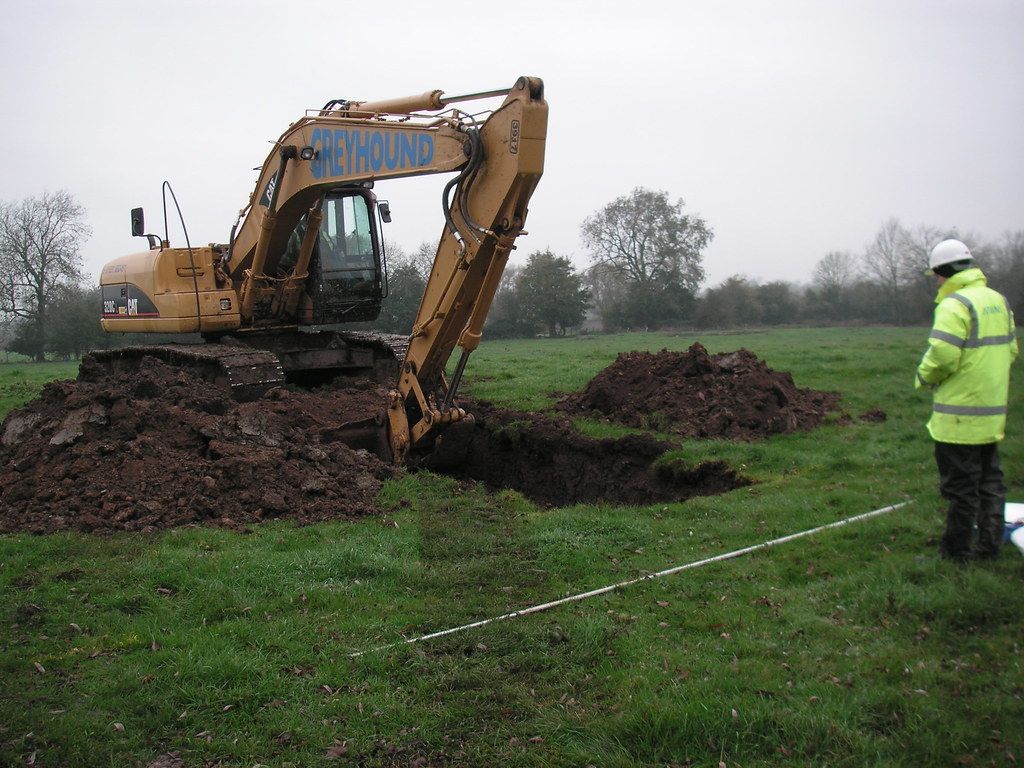
A test pit (also known as a trial pit) is an excavated opening, typically dug with a backhoe or excavator, that lets an engineer or geologist walk down and examine soil, rock, and groundwater conditions directly, in place, rather than inferring them from a narrow drilled core. They're one of the oldest and most reliable methods of subsurface investigation, and they remain a standard tool on projects where visual inspection, in-situ testing, or bulk sampling matter more than depth.
This guide covers what a test pit actually is, when to use one instead of a borehole, and what needs to end up in your log.
What Is a Test Pit in Construction?
In construction and geotechnical engineering, a test pit is a shallow excavation — usually 6 to 15 feet deep, though depth is limited by safety requirements and equipment reach — dug specifically to expose soil and rock strata for direct observation. Unlike a borehole, which retrieves a narrow column of material through drilling, a test pit opens up a wide cross-section of the ground.
That width is the whole point. A test pit lets you see:
- Lateral variability in soil layers that a 2-inch borehole core would miss entirely
- Fill material, debris, or buried structures (foundations, tanks, utilities) that drilling can punch straight through without flagging
- Groundwater seepage and its exact depth of first appearance
- Root systems, voids, or fractures in bedrock
- In-situ density and structure of soils that are disturbed by drilling (loose sands, in particular)
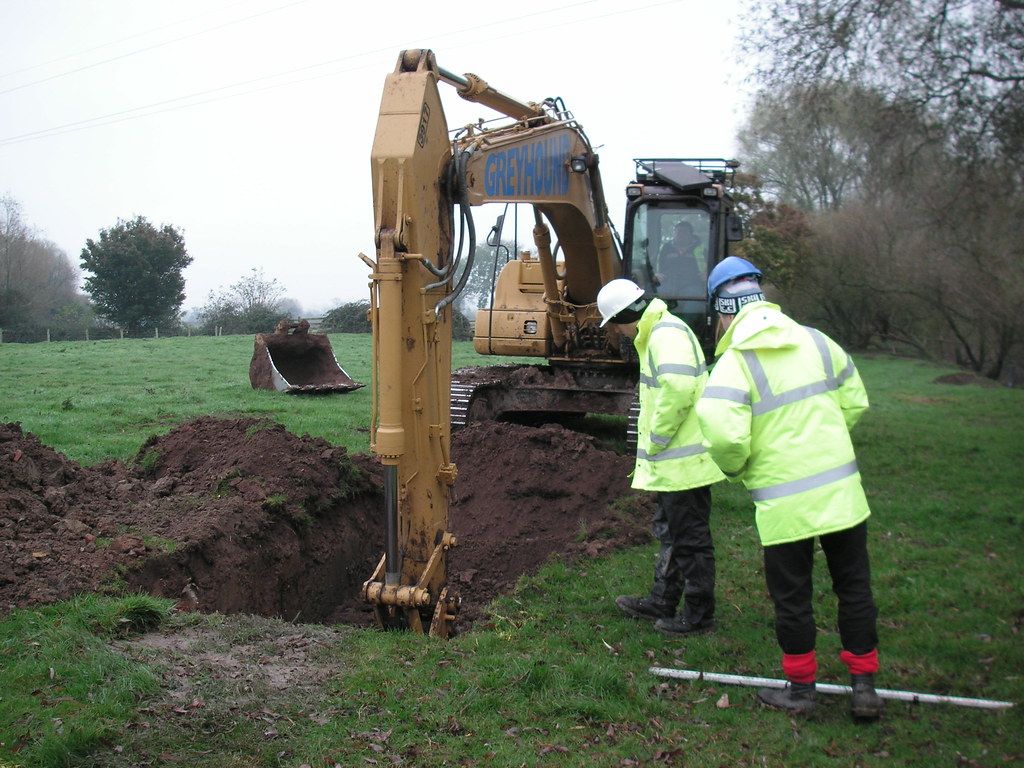
Test pits are typically excavated with a rubber-tired or tracked backhoe, though hand-dug pits are still used for shallow, sensitive, or space-constrained sites. An engineer or geologist logs the pit from the surface or, where entry is permitted and shored, from within the excavation itself.
Test Pit vs. Borehole: Which Do You Need?
This is the question that actually drives method selection on most projects, and the answer is almost always "both, for different reasons" rather than "one instead of the other."
| Test Pit | Borehole | | ------------------- | ---------------------------------------------------------------------------------------------------------------------------------------------------------------------------------------- | ------------------------------------------------------------------------------------------------------------------------------------------------------- | | Depth | Shallow (typically <15ft) | Can reach any depth | | Lateral visibility | Full-width cross-section | Narrow core only | | Sample size | Bulk, undisturbed if hand-cut | Limited by tube/core diameter | | Groundwater observation | Excellent - visible seepage | Requires monitoring well or piezometer | | Cost per location | Lower for shallow work | Higher, scales with depth | Site disturbance | Larger footprint, needs backfill | Minimal surface disturbance | | Access | Requires equipment access | Can reach tight or remote spots |
Test pits win when the design question is shallow, foundation bearing capacity in the top few feet, utility conflicts, fill extent, or contamination in near-surface soils. Boreholes win when you need depth, continuous stratigraphy at depth, or samples for laboratory testing that require minimal disturbance from a specific horizon.
Most site investigation programs use both: test pits to characterize shallow conditions across a footprint quickly and cheaply, boreholes to confirm deeper conditions at specific structural locations.
What Goes Into a Test Pit Log
A test pit log needs to capture more than a borehole log does in some respects, because you're recording an exposed face rather than a retrieved core. At minimum:
- Location, date, and excavation method (equipment type, bucket width)
- Depth to each stratum change, with soil/rock classification (USCS or equivalent)
- Groundwater depth, noted at first appearance and again at the time of backfill if it rises
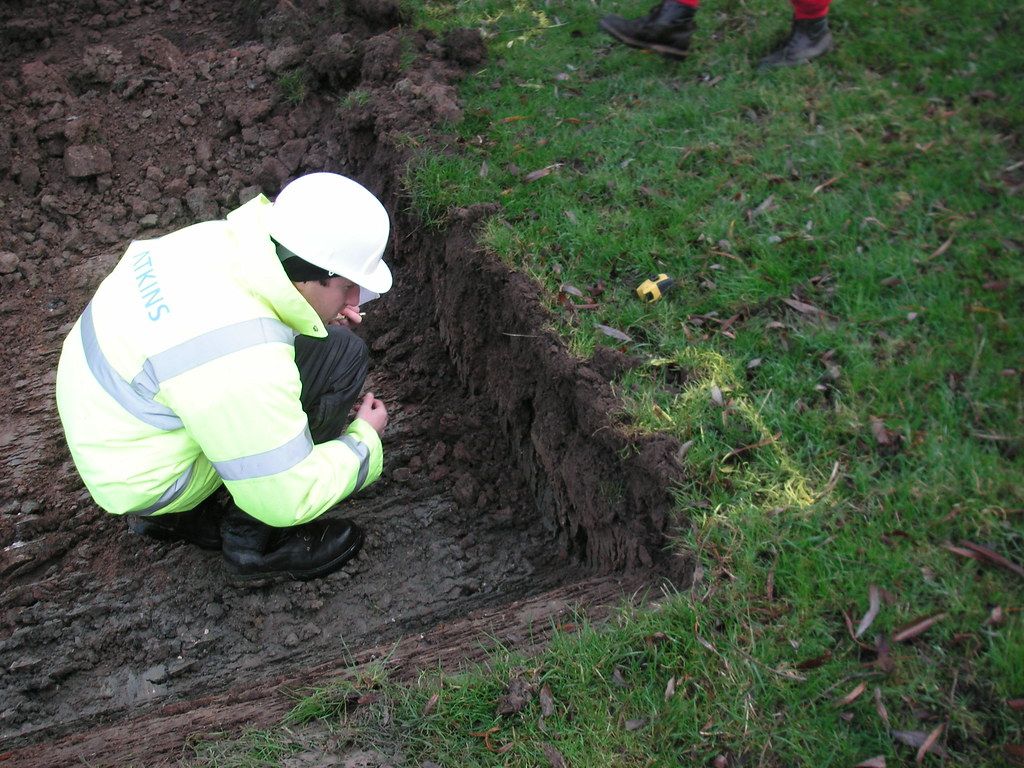
- Sidewall photos — a test pit's biggest advantage over a borehole is visual context, and a log without photos throws that advantage away
- Sample locations and types (bulk, bag, or block samples)
- Any anomalies — buried debris, old foundations, utilities, contamination staining, or unusual moisture
- Shoring and safety notes, if personnel entered the pit
- Backfill method and compaction, since test pits disturb more ground than a borehole and often need documented reinstatement
The photo requirement is the one field teams most often skip in the moment and regret later. A sidewall photo takes ten seconds and resolves disputes about strata boundaries that a written description alone can't.
When Test Pits Are the Wrong Tool
Test pits aren't a universal substitute for drilling. Avoid them when:
- You need data below the safe/practical excavation depth for the site (generally 15–20 ft, less in unstable soils)
- Groundwater is high enough that the pit collapses or floods before it can be logged
- The site has underground utilities that haven't been located and cleared
- Personnel entry would be required but shoring isn't feasible
- You need continuous, undisturbed samples for detailed lab testing (shear strength, consolidation) from a specific depth
In those cases a borehole, or a combination of a shallow test pit plus a deeper borehole at the same location, is the better call.
Logging Test Pits Alongside Borehole Data
The practical challenge most firms run into isn't deciding between test pits and boreholes. It's managing both data types in one system without losing the context that makes test pit data valuable in the first place. A test pit log that's just a text description, filed separately from your borehole logs, loses the photos, the sidewall sketches, and the spatial relationship to nearby boreholes that make the investigation useful at design time.
TabLogs supports test pit logging alongside standard borehole and CPT data in the same project database, with photo attachment built into the log entry, so a test pit's sidewall photo sits next to its stratigraphy the same way a core photo would for a borehole.
If you're currently tracking test pits in a separate spreadsheet or paper log from the rest of your site investigation data, it's worth checking whether that split is costing your team time at reporting stage.
Related reading: What Is a Boring Log? · Understanding the Different Types of Geotechnical Tests